
FIRE & ICE
Confucius said “The beginning of wisdom is to call things by their proper name.”

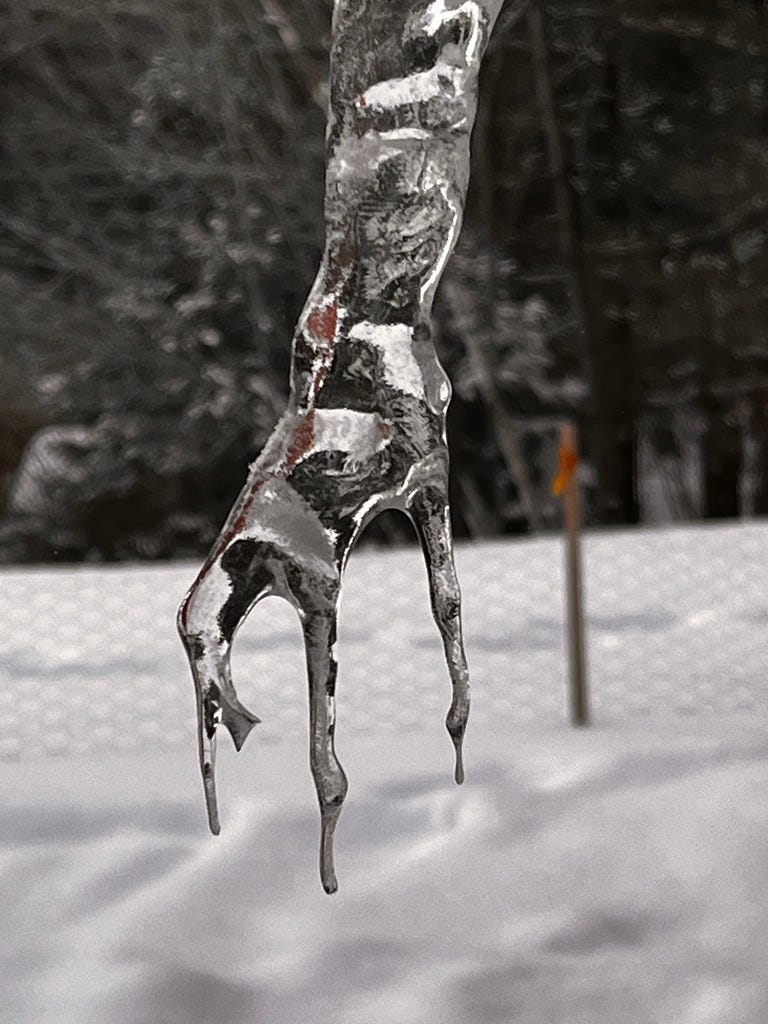
WORDS MATTER. There comes a point when certain words need to be reclaimed, and I’ve reached that point with the word ‘ice’ which I refuse to capitalize from now on. As an acronym, it might just as well stand for Indefensible Cruelty Extreme or Inhumane Callous Entity. What matters is what a thing IS, not what it’s called — substance over name. WORDS MATTER.
When I use the word ‘ice,’ I want to summon an image of the myriad crystalline formations seen on a sunny winter morning when light passes through them, refracting & creating a spectacle of shimmering glitter, dazzling the eyes. Or the sound of tinkling fragments dropped from candied tree branches onto a crust of snow. While admiring the varied presentations of ice in nature, I also respect the treachery of black ice & slippery walkways.
I grew up in a very old house with small glass window panes. On the coldest winter mornings, we would awaken to windows that sparkled, a miracle of ice coating the indoor sides of those panes. You could scratch with a fingernail or blow patiently on the frost, concentrating each warm breath on one spot, until a tiny, clear window would open in the frost. Through that round opening you could look out, squinting, at the spectacular twinkling world before you.
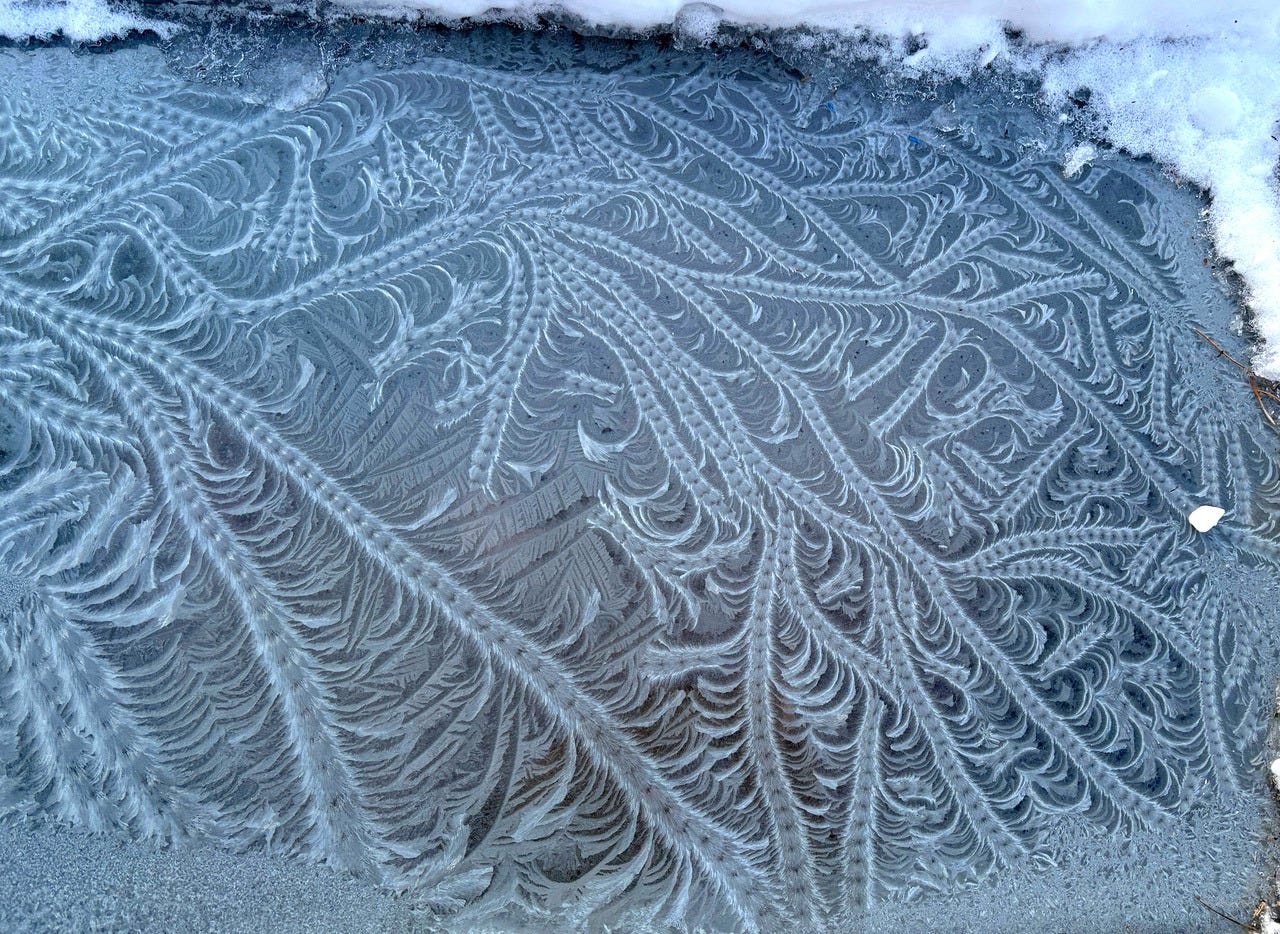
Ice in nature presents in various forms, depending on air temperature, atmospheric moisture, precipitation, impurities in air and water, and wind chill. Many of you are familiar with the elaborate ice flowers that appear overnight on glass when it’s exposed to below-freezing temperatures on the outside and moist air on the inside.
Window frost was more common in the past, when houses still had single-pane windows. The double-pane windows more common today don’t get cold enough on the inside to inspire the formation of ice flowers, being much better insulators. The photo below shows one of the most amazing ice designs I’ve ever seen:
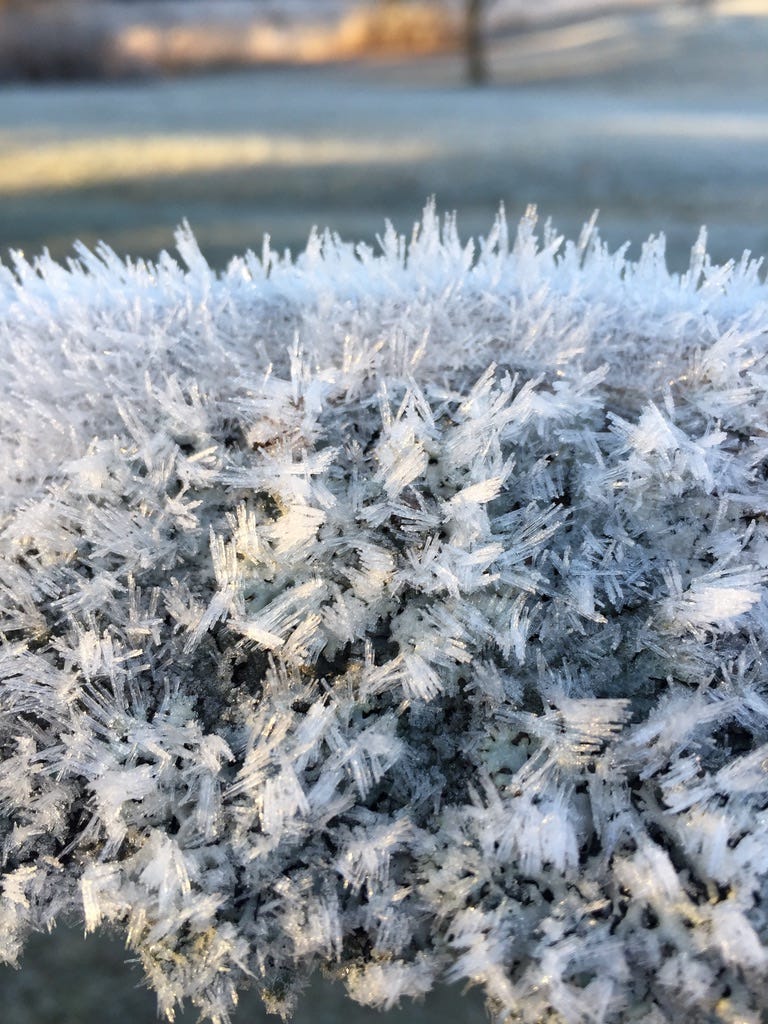
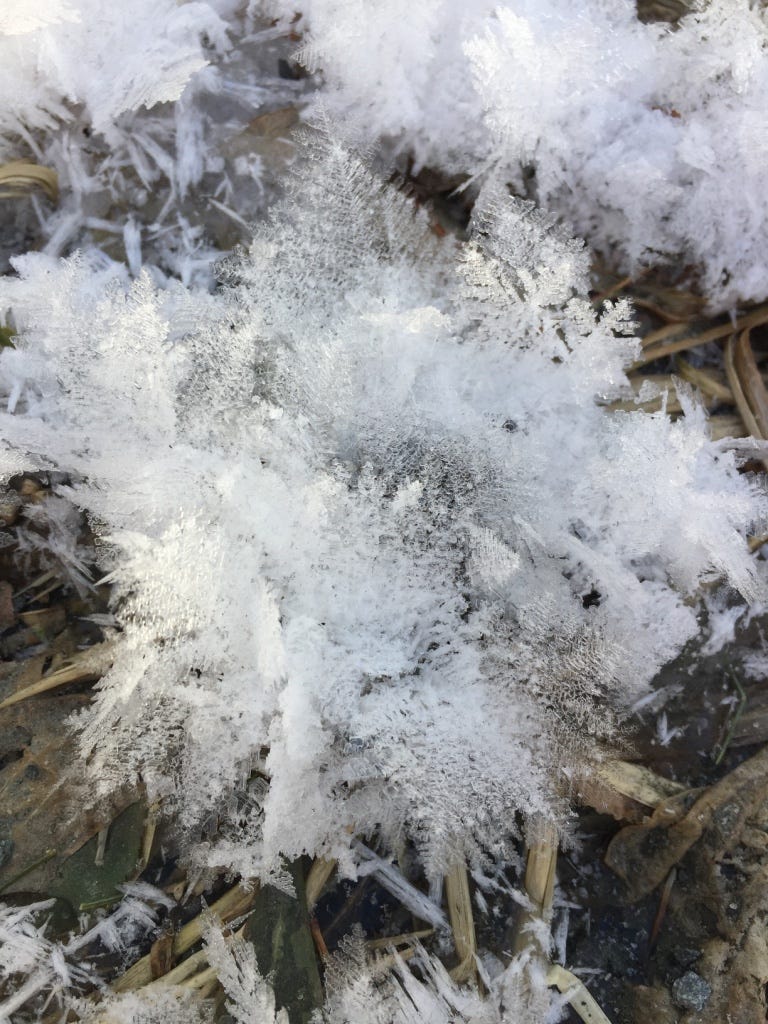
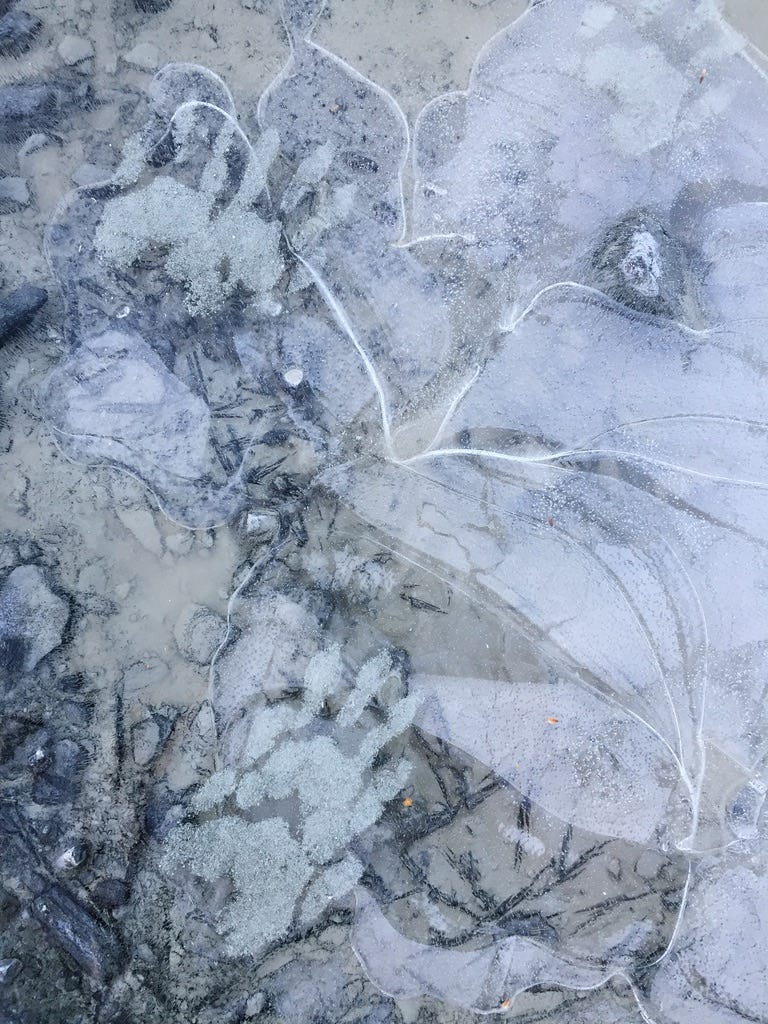
Below are a few photos I’ve taken over the years of other kinds of ice formations.
Hoarfrost forms when water vapor in the air condenses on cold surfaces on clear, windless nights, freezing directly from the vapor state without turning into liquid water first in the process. This explains hoarfrost’s delicate needle-like crystals.
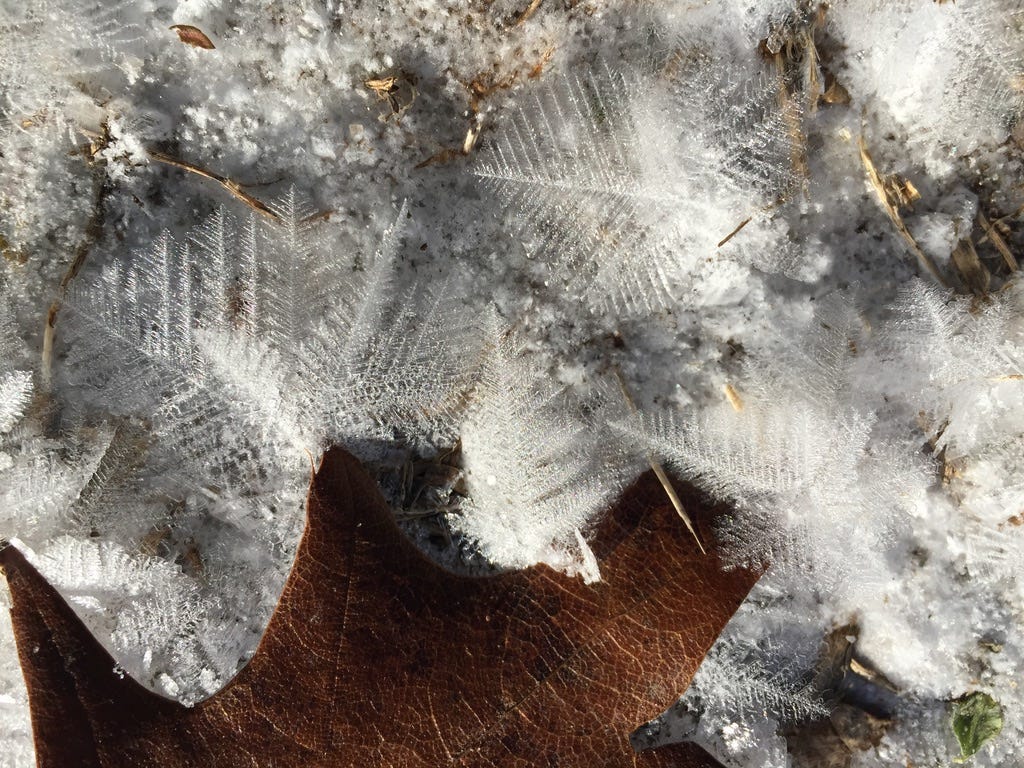
Rime ice, on the other hand, though similar, is more of a feathery or fluffy accumulation of ice crystals that lack the clear definition of hoarfrost. It forms under foggy or cloudy conditions when moisture in the air freezes on cold surfaces. It can build up over time as long as the foggy and cold conditions persist. It doesn’t weigh down the structure it is built on, whereas hoarfrost can accumulate enough weight to break tree limbs or down power lines.
Water in motion, as in waterfalls, will freeze midflow during prolonged periods of below freezing temperatures.
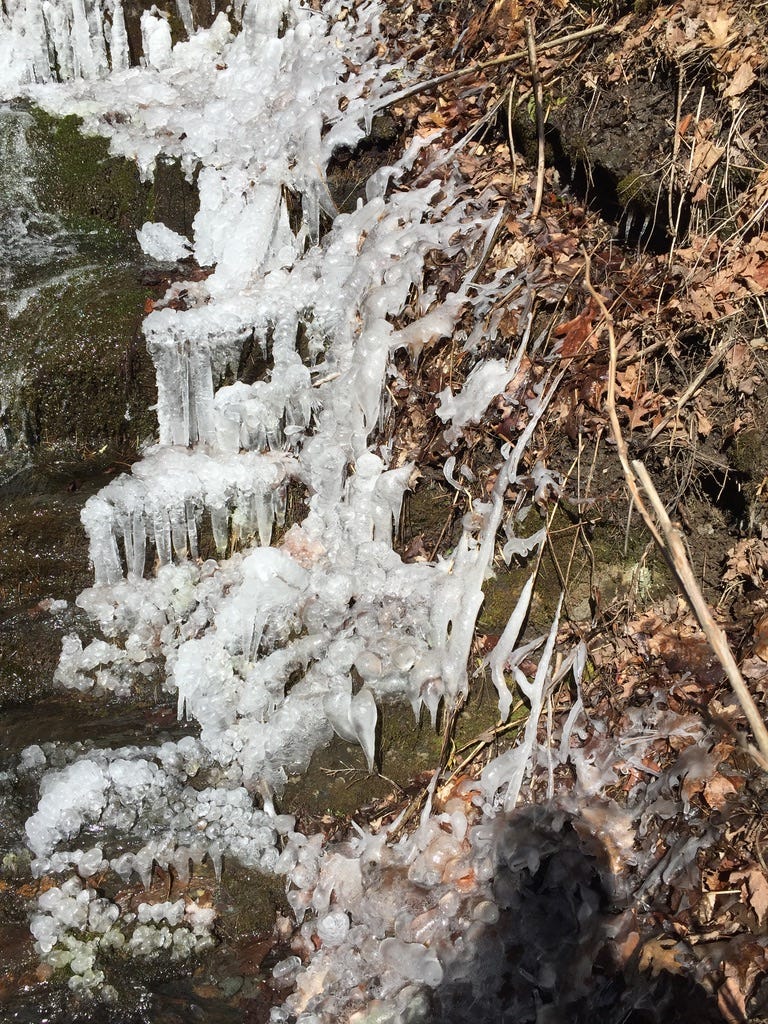
How does a waterfall freeze when the water is constantly flowing? Ashish explains it this way on www.scienceabc.com:
It happens like this: the water in the river/stream that supplies water to the waterfall supercools (when water experiences a temperature less than its freezing point without becoming a solid) when the temperature dips below the freezing point (around -6 degrees Celsius). This results in a gradual slowing down of the flow as water molecules begin to stick to each other and form tiny, solid particles of ‘frazil ice’. Frazil ice, which has an oily appearance when seen on the surface of water, is a cluster of loose, randomly-oriented ice crystals shaped like tiny needles. It usually forms in rivers, lakes, oceans, and other water bodies containing turbulent, open and supercooled water. These frazil ice discs cluster together and adhere to nearby surfaces, so in free-falling waterfalls, these discs attach to the overhang, whereas in waterfalls that flow down a cliff, the discs cling on to the cold rocks. Provided that the temperature stays at that level for a long enough time, frazil ice forms an anchor at the spot where the water drops from the rocks and begins to grow downwards, creating a column as tall as the height from which the water falls.
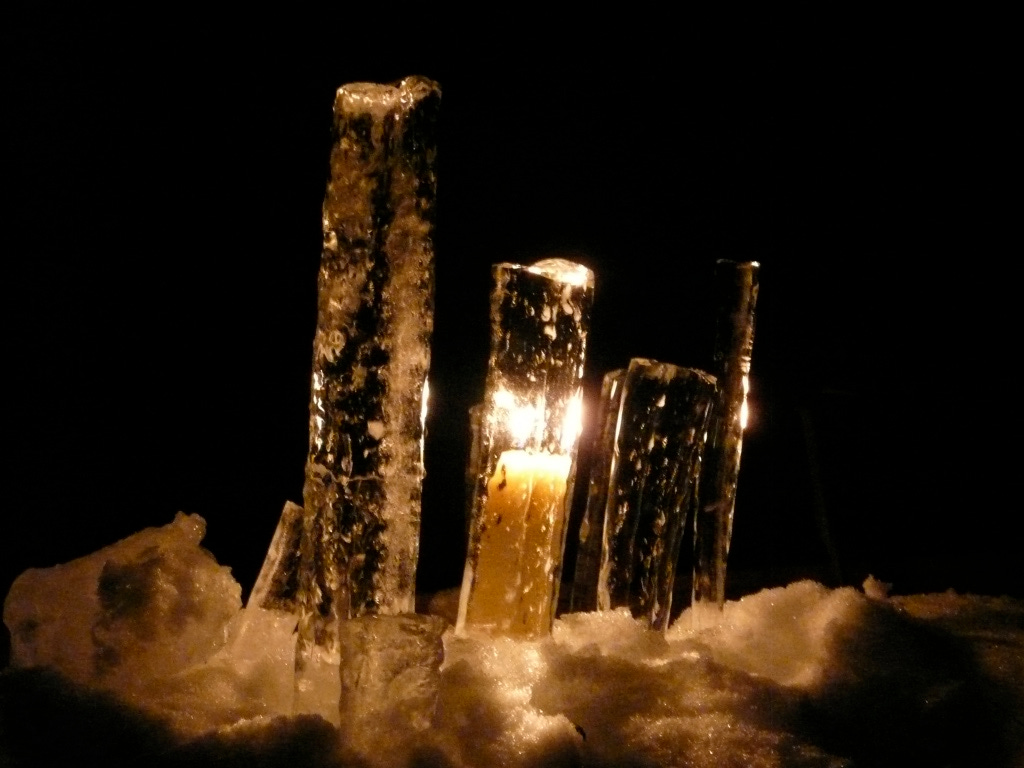
One of the most magical of winter treats is to see the air filled with clouds of diamond dust — also known as clear-sky precipitation, because it forms when the sky is clear. It requires temperatures quite below freezing, so is more commonly seen in Antarctica and the Arctic. I see it occasionally early on a winter morning, just as the sun appears over the horizon. Suddenly the air is filled with floating specks of gold whirling in constant slow motion. I’ve tried many times to capture a video of this fairy dust, but it remains elusive in the eye of the camera —an ephemeral treat to be marvelled at, undistracted by technology, before it disappears.
Fire and Ice
—By Robert Frost
Some say the world will end in fire,
Some say in ice.
From what I’ve tasted of desire
I hold with those who favor fire.
But if it had to perish twice,
I think I know enough of hate
To say that for destruction ice
Is also great
And would suffice.
Beautiful!!
absolutely gorgeous, almost unbelievably intricate patterns in ice, along with how their creation occurs. Thank you for this wondrous essay. I'm afraid Ice will continue for a while longer, despite this reclamation of the word. But ice will outlast everything.