
Into The Wild
"O my poore kingdome..thou wilt be a wildernesse againe, Peopled with woolues, thy old inhabitants." W. Shakespeare, Henry IV, Part 2 iv. iii. 265

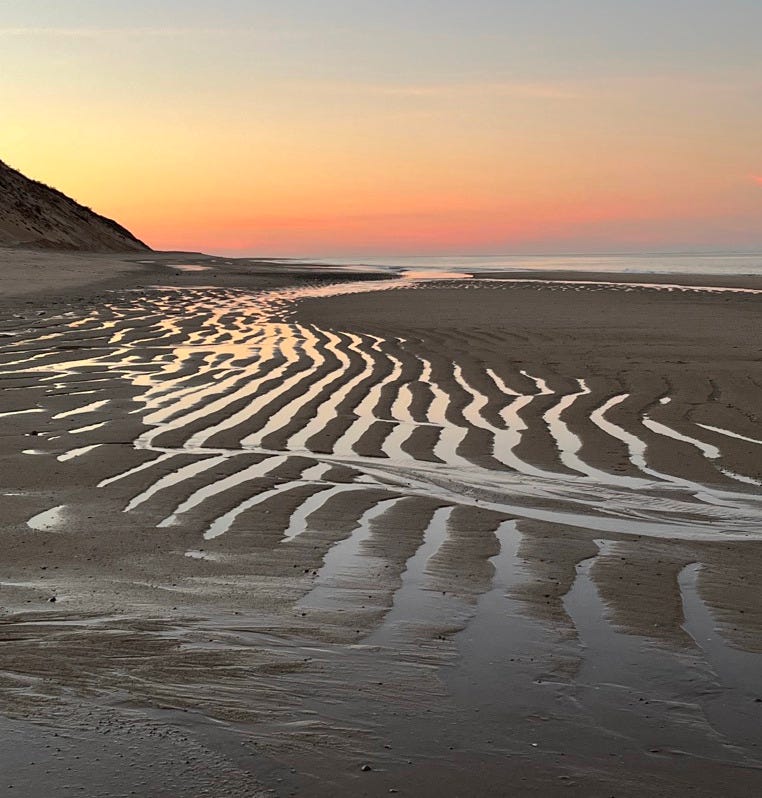
There have been times in my life when I’ve found myself leaving the everyday behind, spurred to venture into unknown realms: the watery deep, mountainous heights, or worlds below ground. I’m often drawn back to these particular moments, which last in my memory.
Years ago, on vacation in the Caribbean, I jumped off of our small boat into the crystalline, lapping waves, for a quick swim that soon became a mini-journey — leaving my husband and two children behind with our guide. Paddling slowly along, I snorkeled farther & farther away, hypnotized by ever-moving patterns of light & shade created by sun, sand, & water — and the seductive tinkling sound made by a multitude of pebbles and shells washing gently back and forth on the sunlit rippled ocean bed.
Staring deep into the underwater, I was surrounded by legions of shimmering, many-colored fish moving crosswise to the soft current, turning in unison, flicking & flaunting their silvery sides as if jousting with the sun — couriers of the sea flashing an invitation to join the primeval dance of joy.
As the boat with my little family on it receded further & further into the distance, I paddled & floated on that endless sea of otherworldly sensation, reluctant to reverse direction and return to human civilization. But eventually it was time to turn, swim back, & clamber up onto the boat, and I did.
Then in 2001, I was lucky enough to spend two weeks in a small Swiss mountain village in the Engadin, where I hiked daily. On one particular day, I started out by riding the little chairlift out of the village and slowly up. My chair passed over rocky fields of cows, the jingle of their many-toned bells an enchanting distant music; then directly below me, three generations of a farm family haying together — baby asleep in a basket under a clump of small trees, grandmother in a long blue flowered dress raking hay nearby, young children hefting piles onto the wagon. At the end of the line, I continued on foot through a shady forest where the rules of seasonal mushroom-gathering were prominently posted along the way; past lengths of sawed-up tree limbs, neatly stacked, with initials or names written in crayon or pencil on the ends of some pieces to indicate whose pile it was. Leaving the forest behind, the trail then emerged into the open again, dwindling to a narrow, dry path that rose ever higher, ever closer to points on a level with snowy alps.
As the loose scree of the trail became more and more treacherous underfoot, I began to realize it was foolish, hiking alone, to continue upward. So far I hadn’t seen another soul. One false step or extra-iffy foothold, and down I’d go. But I really wanted to make it to the top, wherever that was. So in spite of warning thoughts, I went on. Finally I reached a very small summit, still with no one else in sight. I stood in the sun, stately alps rising all along the valley, a cool breeze on my hot face, resting, reflecting, exhilarated. After a while, a party of six younger folk came bounding up the slope. When they arrived, I made the quick decision to head back down before they did, figuring they’d pick up the pieces if I fell.
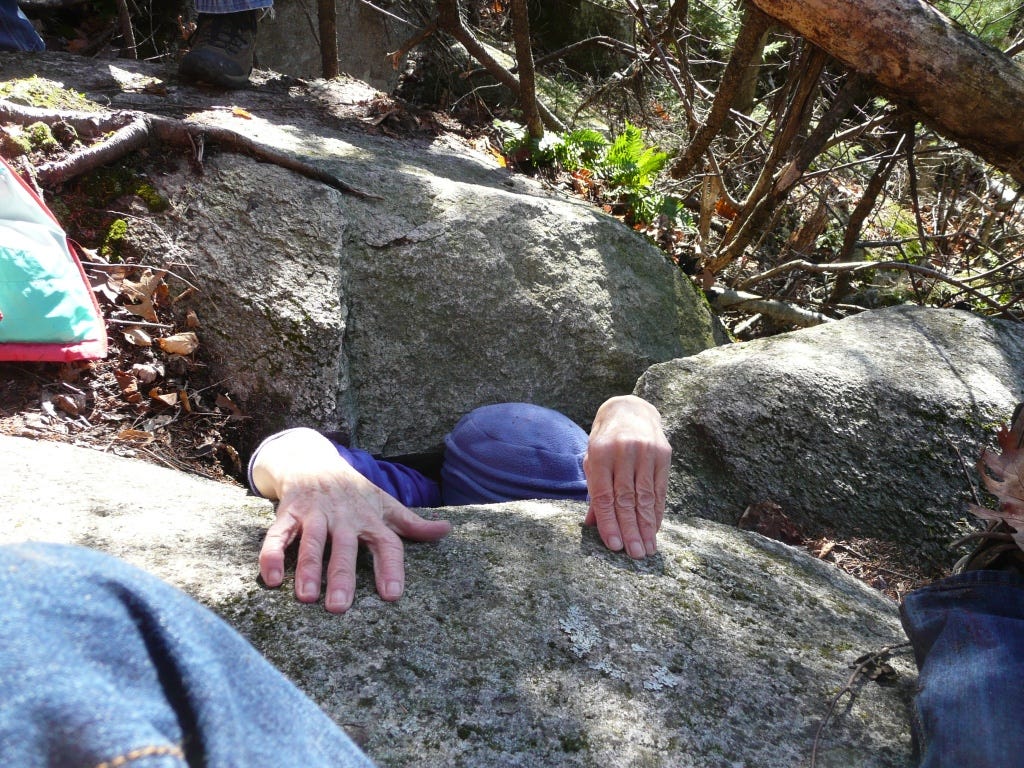
More recently, I joined a small group of ten on a forest walk led by bear expert Ben Kilham, to learn about black bear sign and habitat. He led us to a bear’s den — unoccupied, he assured us — and said anyone who wanted to could go down into it. I was curious to try that, and slight enough to fit. Lowering and twisting my body down through a narrow opening between enormous boulders, I entered a dim underground chamber, a roomy cave with rock floor & a faint fragrance of animal — someone’s room. Lying back against stone, I closed my eyes.
Muffled voices and laughter above-ground receded from my awareness as I sank into a sense of being in another world — a world of safety and calm. I could imagine myself as a she-bear, cozy in this dark, restful place with two small cubs nestled against me. Sinking into that tranquility, I took my time heading back up into sunlight and human company.
As I revisit these three scenes, in this week, on this day — I wonder why they resurfaced at this time, and in such a strong way. I had no inkling they were coming until Saturday, January 3rd, when I led a writing workshop at the Enfield Shaker Museum. We all settled in for a 35-minute silent scribble, using one of the prompts offered as a starting point. I chose ‘Into The Wild.’ The three indelible memories recounted above are what I ended up scribbling about. Why?
The inescapable awareness of our world being led deeper & deeper into a different sort of ‘wilderness’ played a part, because on the very morning of — in fact on the way to, the workshop — I turned on the car radio and heard the astounding news out of Venezuela. There were other possible posts for today that I’d been working on, but as the events of the past two weeks have piled up, culminating in reports that ICE is now shooting American citizens, I am in more and more of a quandary — disheartened & not knowing what to say to my readers, or how to speak to the world’s distress.
The natural world is not all beauty & light. It is not without predation, threat, danger, death, destruction. But I have yet to witness seemingly cruel, greedy behavior among animals that does not, on closer examination, in some way preserve the natural order for the protection and continuation of the species. Even the largest, most powerful of animals behave within certain boundaries, living according to nature’s design. What humans might interpret as cruelty — for example, the way cats toss, pounce, bat, & recapture their prey — has a defensible explanation.
In the wild, cats both large & small play with their prey in a deliberate attempt to tire the prey animal out, to a point where the prey is less likely to cause injury to the cat via teeth, beak, or claws when eventually it delivers the last fatal bite through the spinal cord, striking to kill. Honing their hunting skills through practice is a survival technique as well, one passed on to the young who learn by watching. And even as I write those words, I suddenly think: WE are being tossed & batted & tired out. May the analogy stop there.
And so I return to certain memories for renewal. I have probably shared Wendell Berry’s words before, but they are pertinent again & again.
The Peace of Wild Things, by Wendell Berry
When despair for the world grows in me
and I wake in the night at the least sound
in fear of what my life and my children’s lives may be,
I go and lie down where the wood drake
rests in his beauty on the water, and the great heron feeds.
I come into the peace of wild things
who do not tax their lives with forethought
of grief. I come into the presence of still water.
And I feel above me the day-blind stars
waiting with their light. For a time
I rest in the grace of the world, and am free.
This piece about seeking stillness outside of human chaos hits diferent right now. The bear den moment especially, that instinct to find a sheltered space when the world feels chaotic makes alot of sense. I've had similar pulls to quieter environments during uncertain periods, and there's something grounding about recognizing we're not the only species that needs refuge from the storm.
This is beautiful. Thanks dear Clyde!